
Skip to content
Learn

Study plans

A route through a book, paced so that finishing it is realistic: the Bhagavad-gītā in eighteen weeks, or in a year.

Source boundary visible4 active units

Study-plan studio

Set a sustainable cadence and plan reviews before starting.

The school developed these teaching notes. They are not presented as Aniruddha Dāsa's authored commentary. The source trail and limits remain visible for human review.

Learners moving from source reading to practice and teaching
Learn visibly: retrieve · make · discuss · teach · return
Learning outcomes
  • Create something that can be inspected
  • Keep source, interpretation and uncertainty visible
  • Use teach-back as evidence of understanding
Saved on this device0%
Course sequence

Make evidence at every step

Teach-back

Explain the result to another person without looking, then reopen the source and correct the explanation visibly.

Completion evidence

A dated plan with catch-up rules.

Research and source trail
Read the complete teaching notesOpen
Full lesson readerFormative assessment included

Read less. Do more. Show what changed.

Every unit below contains an explanation, a worked model, immediate practice, a source boundary and a check for understanding. The familiar “learning pyramid” percentages are not used; its useful active modes are rebuilt here with retrieval, spacing, feedback and learner choice.

Encounter
Retrieve
Demonstrate
Discuss
Practise
Teach
Choose a lesson

All 4 lessons are complete.

Lesson 1 of 4

Encounter

Read or watch once for structure and mark questions.

1 · Understand the move

Familiarity is not yet recall. Close the source, make an attempt, reopen it and correct the attempt in a visibly different colour.

In this lesson, the concrete target is A three-point orientation note. Begin by defining what a successful example would contain and what it would deliberately leave out. This makes the standard inspectable before anyone is assessed.

2 · Worked model

Begin with one worked example. Study the decisions it contains, cover it, reconstruct the pattern and compare the reconstruction with the source.

I noticeI decideI verify
3 · Practise now

Put the source away and make a first attempt in ten minutes. Do not polish it. Reopen the source, underline corrections and write one sentence explaining why each correction mattered. Then use the result in a new situation.

Use the idea in a new comparison, diagram, example or spoken explanation. Transfer shows more than recognising the same wording again.

4 · Check the boundary

A mistake is formative evidence. Record what kind of cue was missing and schedule a shorter return instead of simply rereading everything.

  • The result is visible: a three-point orientation note.
  • A reader can distinguish source, interpretation, illustration and uncertainty.
  • The learner can explain the central move without looking, then correct it from the source.

Autosaved privately on this device.
Performance assessment

Evidence before completion

Four-part rubric
Accuracy
Claims match the cited source and limits are named.
Understanding
The learner explains relationships, not only wording.
Application
The central move works in a new case or audience.
Teaching
Another person can follow, question and verify it.
Inspect sources and classroom resourcesOpen
Starter library3 complete model resources

Open, use and adapt - not an empty shelf

These complete, source-linked resources accompany Study-plan studio. Each one includes a bounded reading, a visual sequence, an immediate practice and a direct source trail. They may be reviewed, rewritten or replaced without misattributing authorship.

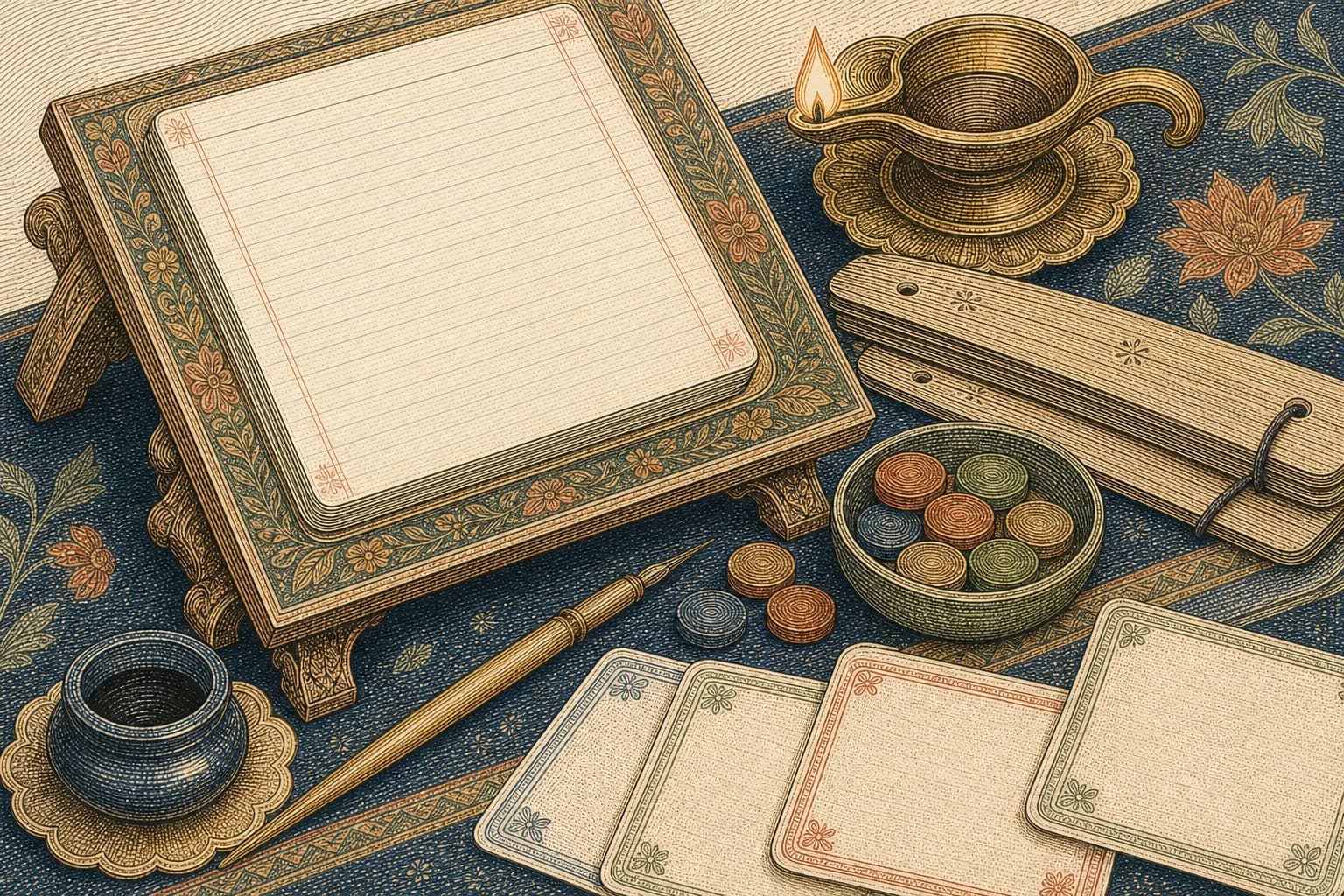
Study tools, folios and learning symbols
Read · see · attempt · verify · teach
Study article · 8 minutesResearch edition

Why rereading feels fluent before knowledge is retrievable

Familiar words can create confidence without producing independent recall.

Complete reading

Rereading makes the page easier to recognise, but the test of usable learning is whether the idea can be reconstructed when the page is absent. An early attempt may feel harder precisely because it exposes missing links that fluent reading hides.

Read once for structure. Close the source and write three claims from memory. Reopen it, correct in another colour and turn each correction into a future prompt. Space the next attempt instead of repeating it immediately until the answer feels familiar.

Visual sequence
  1. 1Read once
  2. 2Retrieve closed-book
  3. 3Correct visibly
Do it now

After ten minutes, explain the material aloud without notes. Record only the gaps that actually appeared.

Source: Roediger & Karpicke · test-enhanced learning
Seven-day planResearch edition

A small schedule with deliberate returns

One source moves through orientation, retrieval, use, dialogue and teaching across a week.

Complete reading

Day one is an encounter and a rough map. Day two begins with recall before reopening. Day three adds a worked example. Day four compares a new case. Day five uses discussion to reveal ambiguity. Day six is teach-back; day seven is a final retrieval and review decision.

Keep each session short enough to repeat. If a day is missed, do not double the next session. Resume with retrieval, mark the lapse and preserve the spacing pattern. The schedule serves memory; memory does not serve an immaculate calendar.

Visual sequence
  1. 1Orient
  2. 2Retrieve and use
  3. 3Teach and schedule
Do it now

Put three return dates into your calendar now and write the exact cue you will attempt on each date.

Source: IES · spacing and interleaving recommendations
Choice boardResearch edition

Show understanding in more than one way

A diagram, spoken explanation or written comparison can target the same learning result.

Complete reading

Learners differ in how they best perceive information and express developing understanding. Offer meaningful choices while keeping the success criteria stable: the relationship must still be accurate, the source visible and the explanation independently usable.

Choice is not the absence of rigour. A visual map must label its connections; an audio response must cite its reference; a written comparison must identify its dimensions. Different media can reveal different strengths and barriers.

Visual sequence
  1. 1Choose a medium
  2. 2Keep one standard
  3. 3Reflect on barriers
Do it now

Explain the same idea as a six-box diagram and a 60-second voice note. Compare what each medium made easier to notice.

Source: CAST · Universal Design for Learning 3.0
Open practice and export toolsOpen
Complete local learning queue35 cards

Eighteen-chapter planning deck

Reconstruct the whole-book sequence before opening the plan. A chapter is easier to schedule when its place in the larger map is remembered.

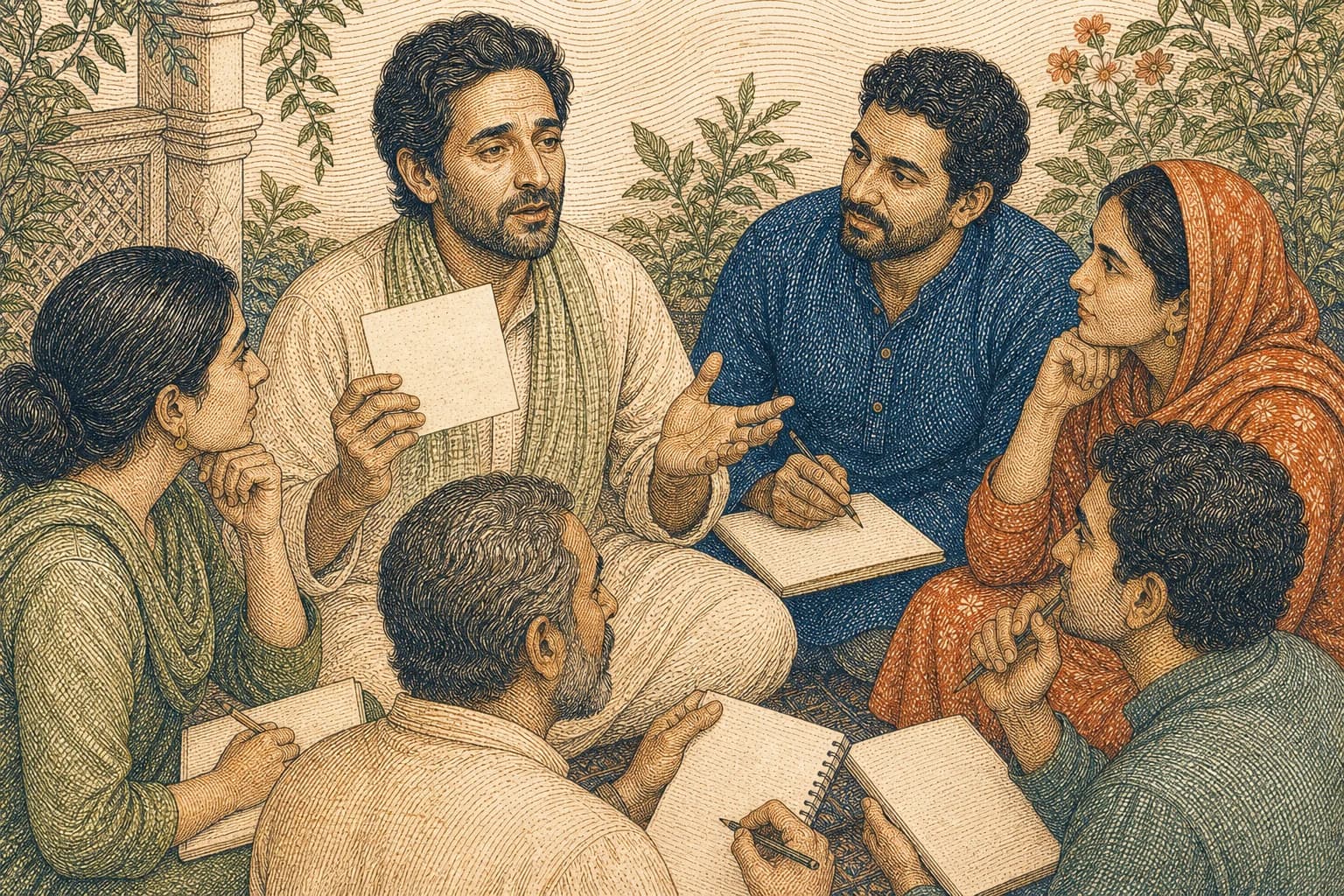
Learners practising recall and teach-back in a discussion circle
Retrieval practice0/35 confident
Bhagavad-gītā chapter 1

Name the chapter and its plain-English signpost.

Attempt aloud or on paper before revealing.

Card 1 of 35. Confidence is private to this device.

Learning cycle

Six actions, not six claims

Mark a step only after producing evidence: an attempt, correction, use, discussion, explanation or scheduled return.

The learning rhythm

Every lesson moves from receiving to sharing

See the method
  1. 01Encounter
  2. 02Recall
  3. 03Apply
  4. 04Discuss
  5. 05Teach
  6. 06Return